9/24/2009

Noughts and Crosses by Malorie Blackman

Noughts and Crosses, by Malorie Blackman is the tale of a world with a clear class distinction, an alternate universe in which racial and social roles are completely reversed. The world is run by the dark-skinned Crosses and served by the white Noughts—hatefully called daggers and blankers, respectively.

The story is that of Sephy Hadley and Callum McGregor , whose love and friendship struggle against the wide gap between their social standings. Sephy, a Cross, is the daughter of one of the most powerful politicians in the country, while Callum is a low-class “blanker,” and would never have met Persephone had his mother not been working for hers. Still, Sephy and Callum build their friendship in secret hours on a strip of beach and midnight meetings in a rose garden. To them, it doesn’t matter that she is a Cross and he is a Nought; they are both simply people. But when Callum is accepted as one of the first Noughts into Sephy’s all-Cross school, everything changes. And as Callum’s family gets more wrapped up in the violent civil rights terrorist organization known as the Liberation Militia, the stakes get even higher. The story whirls into a fast-paced tale of love and trust and hatred and hurting, race and rights and human nature, all tying into the breathtaking climax; a ending no one could have predicted.

Noughts and Crosses is possibly one of the best books I have ever read.

It could easily have been a simplistic story about how racism is bad and all are equal (which is perfectly good and true, but makes for a rather predictable novel), but Noughts and Crosses delves into the deeper, rawer side of that. Rather than simply black-white racism itself, the story examines human nature and the foundation of prejudice. I think the most important thing was the reversal of who had the power. With the dark-skinned people in charge rather than the light-skinned, real-life politics and pre-formed notions are stripped away, and we are left with simply a picture of prejudice.

What was interesting was how false notions about African Americans that have mostly died out the idea that they smell bad, are less clean, and so on, translated to the blacks’ perception of whites. And it fit perfectly! In this scenario, the whites were portrayed as the dirty second class, and all of the terrible racial stereotypes people held and still hold about blacks are given to the whites in this book. One can see that they have nothing to do with a particular skin color, merely the fact that the color is different and perceived as inferior.

The book studies these ideas far more naturally and subtly than I do, giving them a pronounced presence in the story without ever having to state them bluntly as I have just done. Truly, this book is excellent. It does delve into really interesting questions and ideas, but it also paints a picture of friendship and love startlingly well.

Noughts and Crosses is the first in a trilogy, and I give it five out of five daggers. And no, I don’t mean the fictional slur for the Cross class.

Thinking and mind-blown,

Briar

9/01/2009

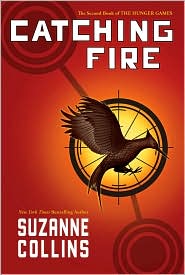
Catching Fire by Suzanne Collins

The Hunger Games, by Suzanne Collins, was the wildly popular dystopia novel released last year. Catching Fire, the eagerly awaited sequel, was equally as riveting—full of extraordinary twists and turns as well as further fleshing of conflicts introduced in its predecessor.

For those unfamiliar with The Hunger Games, the story centers around Katniss Everdeen, who takes her young sister’s place in the The Hunger Games. The Games consist of twenty-four “tributes,” or teenage citizens, who are put in an arena and forced to kill each other off in the hopes of being the last one standing. The book finishes with the end of the Games, and Catching Fire picks up a few weeks after it is all over.

I received this book in early summer as an ARC (Advanced Reader’s Copy) from Scholastic, and positively gobbled it up. The second installment is just as fast-paced and riveting as the first, with even more surprise twists and deeper exploration of the legend of District 13. Katniss grapples with more ethical issues and discovers that whatever she started with the berries in the arena is far from over. A rebellion is stirring, and Katniss finds herself, willing or not, the rallying point of a revolution.

Catching Fire was wonderful. The characters were genuine, and the alternate universe was just as thrilling as it was the first time around. There is the constant, looming threat of the Capitol, and this not-quite-fake charade of love that must be kept up at all times. There is the uncertainty of which boy Katniss should choose, and this whispered revolution that is putting everyone Katniss cares about in danger.

The first half focuses on Katniss’s life in District 12, as well as the victory tour that she and Peeta must go on. There is one massive twist that dictates the second half of the novel so I dare not describe it further, though I will say that the book ends with a huge cliffhanger.

One aspect of this book that did not flow as smoothly as it might have, was that the twists seem a little forced and deliberate—like the novel was so keen on making startling twists that it failed to have the effect of a change that is unexpected.

All in all, however, I think Catching Fire will live up to expectations. There is still the horrifying presence of a “game” in which children are encouraged to kill one another; something I still find difficult to think about. Both books provide originality in a genre that is prone to clichés, and both are well written with genuine characters who suffer real human dilemmas. Five evil daggers, without a doubt.

Yours, Briar

8/12/2009

The Book Thief by Markus Zusak

A while back, the wonderful Tay posted a review on The Book Thief by Markus Zusak. I read the book, and thought it was so wonderful and special that I simply had to review it myself. Tay's awesome review can be found below mine, so you can compare our experiences with the book.

The Book Thief, by Markus Zusak, is the inspiring story of a young German girl who is growing up in the midst of World War II. Abandoned by her mother, underfed and constantly reprimanded by her loving but fierce foster-mother, Leisel Meminger is a girl who finds all the brightness of life in words. Words are her greatest love and her most infuriating enemy—words are the things that allow her to live but Hitler to control and rule.

Hitler, Leisel realizes, can change a country’s image of Jews by using words to warp them into something disgusting, malicious, and sub-human. He can take a country that is scared and off-balance, and use words to soothe and hypnotize. Hitler uses words as his single greatest weapon, and without them, he would be powerless.

On the other hand, Leisel uses words to explore and grow. She uses words and books as her sanctuary in the fear-filled world of Nazi Germany. She uses words to light the eyes of the frail Jewish man in her basement, reminding him of sunlight and happiness as she describes clouds that resemble ropes and a brilliant dripping sun. Leisel uses words to spark happiness and gain knowledge—without them, she would be powerless, too.

This tale of words and power is told in the point of view of an unlikely narrator—Death himself. Death is not God, nor does he even decide when one will die; his job is simply to carry away the souls of the deceased. The best souls, we learn, sit up to meet him, reluctant to die but accepting all the same. Death is in the perfect position make to such striking observations about death and war—he likens himself to the best Nazi, killing and killing and yet still being asked for more.

For the first half of the novel, I was fairly interested in the subject of the story and intrigued by the unorthodox choice of narrator, but was not bringing the book with me everywhere as I later would. It was no chore to read, but it was no great treat either. However, once half of the book was finished and I was now fully acquainted with the cast of characters and the author’s writing style, the story began to pick up. I found myself increasingly interested in the events that took place and by the end of the novel I was practically ripping at the pages, shaken and moved by the beautiful description and the heartfelt dialogue. The author introduced the story’s ending about three quarters in, but the warning did not dilute the power of the end, it made it more poignant. Somehow both times the ending was explained (the first merely an outline, the second fully fleshed out) it was shattering and breathtaking.

The Book Thief takes a while to get started, but once you’re hooked, you simply can’t stop reading. It’s a powerful story of loss and happiness, love and heartbreak, reading and rule and life. Four and a half evil daggers.

Yours,

Briar


Set in Germany in the early 1940’s, The Book Thief is the heartwarming and heartbreaking story of a foster child, fourteen books, many colors, an accordion, death, a Jewish fist fighter, a basement, two wars, a kiss, and a boy with hair the color of lemons.

Liesel Meminger has witnessed more than her share of horrors. Her father disappeared when she was little, and an aura of mystery still surrounds his name. Her brother died on a train on the way to their foster home in Molching, Germany. And there are more horrors to come, though Liesel has no way of knowing. Through it all, Liesel turns to books as a refuge from the death, abandonment, and fear that fills her life, and the lives of all those around her.

Liesel’s long and illustrious career in book thievery begins with The Grave Digger’s Handbook, stolen from the snow at her brother’s burial. Next comes The Shoulder Shrug, stolen from fire. Liesel continues to steal books wherever she can find them. But her personal peace cannot last, and soon the danger of the war looms closer, lurking even within her own home, drawing her always closer to the inevitable. Liesel’s life becomes one of secrets and lies, and truth comes from the most surprising places.

This book is simply amazing. The author has a way of making the smallest details- the color of someone’s eyes, or the texture of their hair- the most important, and mystery is interwoven with every event, no matter how tiny. The unusual format, cavalier use of foreshadowing, and, shall we say, unconventional narration make the book a bit confusing in places, but really drive the point home. On the whole, this is a fabulous, yet absolutely heartbreaking book, and an unusual perspective on World War II. I give it the full five daggers, reluctant that there are no more to give.


Yours,
Tay


8/09/2009

The Tales of Beedle the Bard by J.K. Rowling

Spoiler Warning: If you have not read all 7 Harry Potter books, read at your own risk. (I may be an evil cousin, but no one should be robbed the experience of reading the Harry Potter series.) However, if you haven't read them by now, shame on you. Stop reading this review and go read the bloody series!

We've all heard such timeless (Disney) classics as Cinderella, Sleeping Beauty, and Snow White. These are our beloved childhood bedtime stories, our fairy tales. Well, Wizards and Witches have classic fairy tales too! Five of which can be found in the Wizarding classic The Tales of Beedle the Bard. Just like Muggle fairy tales, each of the five stories deals with a different theme and teaches a lesson. However, as a Muggle, it may be difficult to truly grasp all of the lessons taught by Beedle the Bard. To help us better understand these magical tales, Albus Dumbledore has kindly given extensive commentary on each tale. (The commentary was published without Dumbledore's consent. It was found among his other belongings after his dead.)

Anyone who has read Harry Potter and the Deathly Hallows is at least vaguely familiar with this book of tales. Hermione receives a copy, from Dumbledore if I am not mistaken. Well, Rowling decided to publish a copy of Beedle's tales for Muggle enjoyment. All the sales go to the Children's High Level Group, a charity that provides support to children in need. The children tend to be poor, disabled, or from ethnic minorities. If you want to support a lovely charity AND get a little light-hearted reading on the side, or vice versa, this is definitely the book for you.

If you are still not convinced that this book is worth the buy, here is my criticism of the book (which happens to be mostly good).

The tales themselves are nothing special. They're mostly just cute. The stories are imaginative, but they're nothing like the books. The books are very long, detailed, and everything mentioned seems to have some significance before the series ends (which is one of the reasons I love Rowling's writing so much). These tales are short. There's no time for that kind of no-loose-ends writing. However, Rowling makes up for it by adding Dumbledore's commentary. His words are thoughtful, witty, and all around awesome! Not only does he add insight into the theme and lesson of each story. He also rambles on about little side notes (from letters between himself and Lucius Malfoy to his criticism of Madam Bloxam's revised version of Beedle's "The Wizard and the Hopping Pot"), both of which were quite humorous to say the least. Dumbledore will keep you alternating between the thinker pose (hand stroking the chin) and simply laughing uncontrollably and a variation of a giggle fit.

All in all, I thoroughly enjoyed Beedle's tales. The book is a very quick read, which was rather disappointing to me, but it's still a great little book.

I give The Tales of Beedle the Bard a respectable 3.5 daggers out of 5.


Yours without magic,
Gabriel Gethin

7/18/2009

Patron Saint of Butterflies by Cecelia Galante

Honey and Agnes have lived all of their lives in an isolated religious commune, Mount Blessing, in Connecticut. Electronics are forbidden, and the commune is serene and free from outside temptation or sin. However, underneath the holy and placid surface, there lies Mount Blessing’s best kept secret: the Regulation Room, a room in which sinners are beaten and humiliated by the godlike commune leader, a practice meant to strengthen them and reorient them toward the holy.

Upon discovering this room, Agnes’s skeptical grandmother resolves to take Honey and Agnes out of the commune at her first opportunity, but an accident ending in near-severed fingers and a misguided “miracle,” makes escape urgent and imperative. Honey, Agnes, and the latter’s younger brother are pulled into their grandmother’s car and driven as far from the place as possible, beginning a journey of self-discovery and faith that lasts the entire book.

As the story weaves on, one discovers the day-to-day horrors that consume the lives of the commune’s patrons. Girls starving themselves as they fast for sainthood; tying strings around their waists so tight it is all they can do to keep breathing; hurting, hating themselves for being flawed—always striving for an unattainable perfection, in the name of assimilating to the near-fictional saints of a storybook.

This book was quite realistic, aided most likely by the fact that the author herself had grown up in a religious commune not unlike Mount Blessing. It examines the role of parents—how can they stand by when their children are being beaten, even if they accept that it is in the name of religion? It asks if a child can find it in herself to speak up, even if it means getting loved ones in trouble. It looks at the flaws of organized religion—comparing it to an abstract spirituality or belief in God; questioning if the former is always as holy as it claims. It ponders if one can shed the skin of a twisted childhood, drop the warped habits and viewpoints learned, and heal. But most of all, Patron Saint of Butterflies explores the theme of friendship: how two girls with utterly different outlooks on life share the capacity to heal together and be equals.

I really liked this book. Upon finishing it, I was full of praise, and in the days after I found myself bringing it up again and again. While it examines complex themes and dives into some heavy material, the characters are teenage girls and the storyline is straightforward—making it a simple book to read, but one that forces the reader to confront challenging concepts once the story is over.

I give Patron Saint of Butterflies an evil four out of five daggers.


Briar

6/25/2009

Skin Hunger by Kathleen Duey

Skin Hunger, the first book in the Resurrection of Magic trilogy, tells two stories, centuries apart but mysteriously linked. The first is the tale of a rural teenager named Sadima, who lives in a world where magic exists but true magic is forbidden. At the time of Sadima’s birth, a “magician” assisting with the birth stole her family’s valuables and left her mother to die. As Sadima grows, she discovers a talent for speaking to animals, but conceals it for fear of arousing her father’s bitterness towards magicians. One day, an enigmatic visitor to Sadima’s family’s farm, introducing himself as Franklin, recognizes Sadima’s ability and offers to take her away to the city, but Sadima, frightened, declines. Secretly, though, Sadima yearns for freedom, and years later, she decides to seek Franklin out.

She locates him in the city, working as a servant to a brilliant but arrogant and ruthless young man named Somiss. As time goes on, her relationship with Franklin becomes more than just a friendship. Somiss, meanwhile, spends every day shut away in his study, working obsessively. Slowly, Sadima learns what he is trying to do: bring back magic.

The other plotline, which takes place centuries later, tells the story of Hahp, the son of a wealthy merchant. In Hahp’s world, magic has returned, but can only be used by a select few people, trained at special academies of magic. Hahp’s father sends Hahp to one such academy, where he hopes that Hahp will emerge from the school as a wizard. But Hahp soon finds that only one of the ten boys admitted to the school will graduate, and that the only requirement for graduation is survival.
At the academy of magic, under the wizards Somiss and Franklin, Hahp lives a terrible life. He and the other boys are starved, deprived of basic necessities, forced to perform meaningless tasks, and completely isolated from the outside world. As Hahp struggles to survive and learn the secrets of magic, he forms an unlikely partnership with a peasant boy named Gerrard. But they must exercise the utmost caution, for collaboration among the boys is punishable by death.

Skin Hunger is a riveting novel that tells a deliciously sinister story. Evil lurks in the shadows around every corner, innocent characters are caught up in a web of cruelty and spooky secrets. The whole tone of the book is very eerie, dark, and enigmatic, very different from that of other books I’ve read about magic. Quite refreshing to an evil cousin such as myself.

Skin Hunger’s two-story plotline is definitely unusual, but surprisingly, I didn’t think it detracted from the book at all, because both stories were so good. Reading the book, I searched for the connection between the stories of Sadima and Hahp, and did not find it; nor did I find answers to the many questions that still lingered at the end. Skin Hunger is by no means a complete story in itself. The ending is, somehow, very satisfying, yet leaves the reader hungry for more (no pun intended.) This book made me really want to read the sequel.

And of course, the greatest thing about this book was the compelling storyline. I was completely swept up in the sagas of Sadima and Hahp. I read the book in a single day because it was practically physically impossible to put down. The only thing I didn’t really like was the awkward semi-romance between Sadima and Franklin, which, although it was an interesting plot twist, I felt was rather unnecessary. Still, though, since it was a minor element, the overall book was excellent.

I award this wickedly clever book four and a half scintillating daggers.


Yours,
Tay

6/14/2009

The Physick Book of Deliverance Dane by Katherine Howe

In Katherine Howe's new mystery "The Physick Book of Deliverance Dane," Harvard graduate student Connie is working on her American History Phd dissertation when she gets roped into renovating and selling her grandmother's old house in Marblehead, Massachusetts. When she finds the name "Deliverance Dane" scrawled on a piece of paper tucked into an old Bible in the house, Connie looks the name up and finds that Deliverance was one of her ancestors, a woman who was involved in the Salem Witch Trials of 1692. Connie first begins researching Deliverance's story thinking it will lead her to a great primary source for her dissertation. But soon she becomes entangled in a 300-year-old mystery involving witchcraft, strange family secrets, and a mysterious "Physick Book" that once belonged to Deliverance Dane.

When Connie meets Sam, a fellow history fanatic who works repairing church steeples, the two join forces to search for Deliverance Dane's "Physick Book." It is no easy task to try and track where the book has gone for the past three hundred years. Connie and Sam must dig through numerous historial collections throughout Salem, Mass, trying to track the book's previous owners, and in the process, Connie discovers some surprising details about her family's past.

But what begins as a simple search for a historical book becomes a race against time when it becomes apparent that someone is working against Connie--and it's putting Sam's life in jeopardy.

"The Physick Book of Deliverance Dane" is unlike any other witchcraft story I've read because of its ties to history, and actual facts behind the Salem Witch Trials. It may be a witch-themed book, but the focus is not really on spells and magical abilities. Instead, as the book progresses, the reader finds more and more about Connie's family history, and what life was like for women in Salem in the 17th, 18th, and 19th centuries. Not only is "The Physick Book of Deliverance Dane" an intriguing mystery, but it really brings the victims of the witch trials to life, describing the emotions of them and their families as their friends and neighbors turned on them.

Overall, I really enjoyed this book. The author is really a very talented writer. My only criticism is that the story lacks action in places, and the plotline could have used a little more variation. You'll find this book very interesting if you're into history and mysteries, but if you're looking for a more traditional witchcraft/fantasy tale, this may not be the book for you.

I award this book 4 out of 5 daggers.